
Fri 20 Mar – Koh Rong to Phnom Penh
My trip in Cambodia is pretty much over and so is my holiday as a whole. Returning to work on Monday is close in time but not in geography, so it doesn’t feel real yet. This is the penultimate blog.
We take the ferry back to the mainland and then drive back to Phnom Penh.
The tour has been good. I’ve learnt about the country, which in reality is still recovering from years of personal and economic trauma. The group has been (mostly) cohesive.
It was a lot of driving though as a result of an amended itinerary that kept us away from the Thailand border. This was a detriment. Also, the accommodation has been quite poor. Four nights out of fourteen were without windows. Every single bathroom was mouldy, all the buildings in some state of disrepair. The trip cost A$3,100 with the tour company, and then I estimate that there was another A$700 in personal expenses (meals, shopping, tips, taxis). My flights were approximately A$1,500 return. So these two weeks came to a little over 5k AUD. Maybe Thailand and Laos was very roughly another 3.5k AUD for me (the Gibbon Experience, Thailand Trek and Luang Prabang were the highest expenses, around 600 AUD each). I’d be comfortable saying the whole five weeks were under 10k AUD for myself.
Cost isn’t really a big deal but it’s incredible to think I easily spend half of this in Sydney on rent and bus fare and food over five weeks. The good Canadian retired a year ago and is travelling around South East Asia for six months deciding where to move to for a few years. From a lifestyle point of view retiring in South East Asia has a huge appeal – it feels as though money would be no object. The main issue I imagine is access to acceptable health care – presumably you go to Thailand for that. Our tour guide was saying he was growing up healthcare = witch doctor and natural remedies.
The first claim of the museum is that the ancient Angkor community had no monetary system (specifically, no money) and relied entirely on a bartering system with correlated values of physical items that varied across seasons and geography. Without money, taxes were usually crops, which spoiled quickly and could therefore not be stored for use as salaries of armed forces. Unable to employ a large army, the kingdom was weakened and susceptible to attack from better organised neighbours that had developed a currency. The massive Khmer empire was also very susceptible foreign influence as they relied on trading partners that were able to more effectively specialise with the help of a unitary store of value. Ultimately the lack of currency contributed to its downfall.
The French introduced a common currency to its colonies in the late 19th century, regulated by the now defunct Bank Of Indochina. There were continual issues with this currency (French Indochinese Piastre). Given it was designed for the large rubber companies and not everyday use by the proletariat for things like buying rice and fish, the minimum denomination was too large to be used by the general population. But the main reason for its decline was that it was eventually pegged to the Franc and this became untenable during WW2 (specifically, France deliberately overvalued the Piastre, which meant importing goods in Cambodia for the war was cheaper for France).
The Riel was introduced after independence from France in 1953. The central bank was a total basket case though. For decades it was part of the Executive Branch, controlling both monetary and fiscal policy. It literally can print money to pay down government debt, with no checks and balances. Unsurprisingly, inflation sky rocketed – there were years where inflation was more than 100%.
Then during the Khmer Rouge period (1975-1978) currency was completely abolished. It was illegal to practice any form of commerce, punishable by death. This was a disaster. Without currency, corruption and exploitation was even more rife than before, removing any form of regulation of officials. The Khmer Rouge realised this by the end. In the last few months of the regime before Vietnam took over, the Khmer Rouge tried to implement currency back into the country in order to regain some stability in the economy.
Until the 90s economic recovery was poor. Inflation continued to rise as the central bank printed money to try and fund some kind of return to industrial development. GDP was consistently around 6% but that was 6% from an extremely low base (essentially poverty) and was nowhere near enough to be called a recovery.
In the 90s, Cambodia was recognised as in need of financial aid from the global community. Huge amounts of USD were injected. As part of this influx of foreign aid, Cambodia moved closer to a market economy. This is also the reason today that Cambodia has a dual currency – it accepts both Riel and USD everywhere (even tiny individual street food vendors accept USD cash).
Until this point in time, the museum had been informative. But the criticism and honesty I was appreciating broke down for the displays depicting the current globalised era. The signs said that the Riel was floating but it obviously isn’t. For the last five years at least 1000 Riel = 0.25 USD. That is not a floating currency. There’s obviously some political complexity here, akin to how the political system is purportedly a democracy. If I had had more time I would have asked the staff, who were delighted when I bought a ticket in Khmer (Sohm bot mouy).
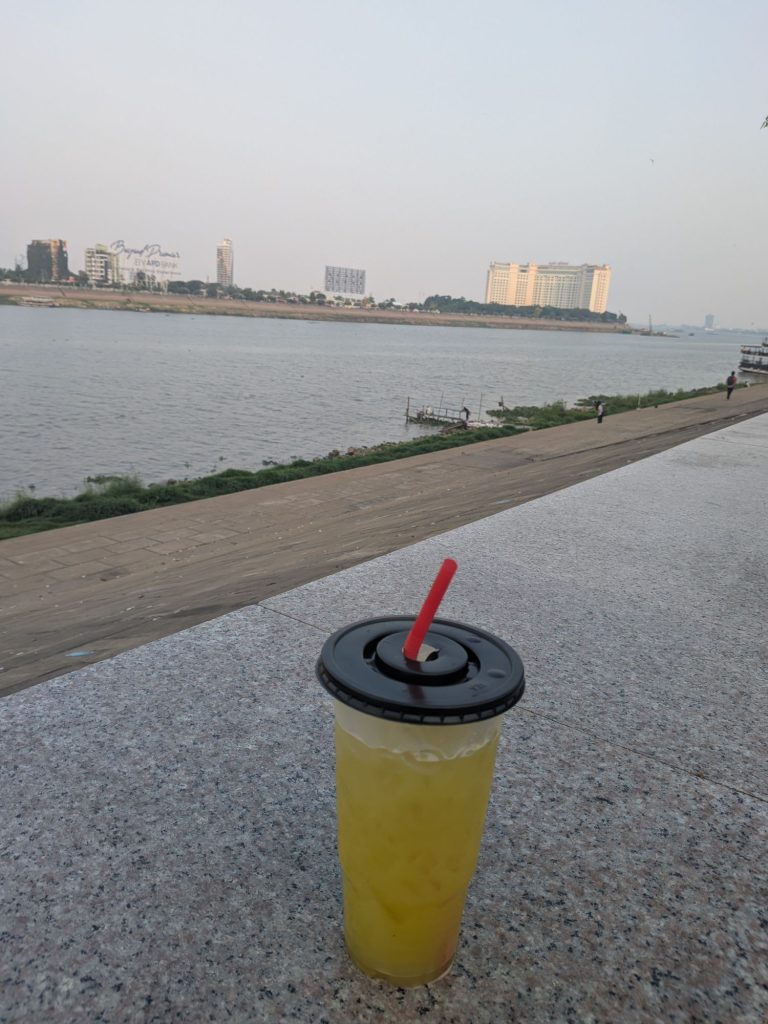
Anyway after that I got this sugarcane juice and the street food vendor asked me in Khmer how long I had lived in Cambodia after I ordered in Khmer. I felt like a bit of a fake when I had to admit I couldn’t understand anything more complex than the price (buon peon = 4000) but he seemed really chuffed regardless.
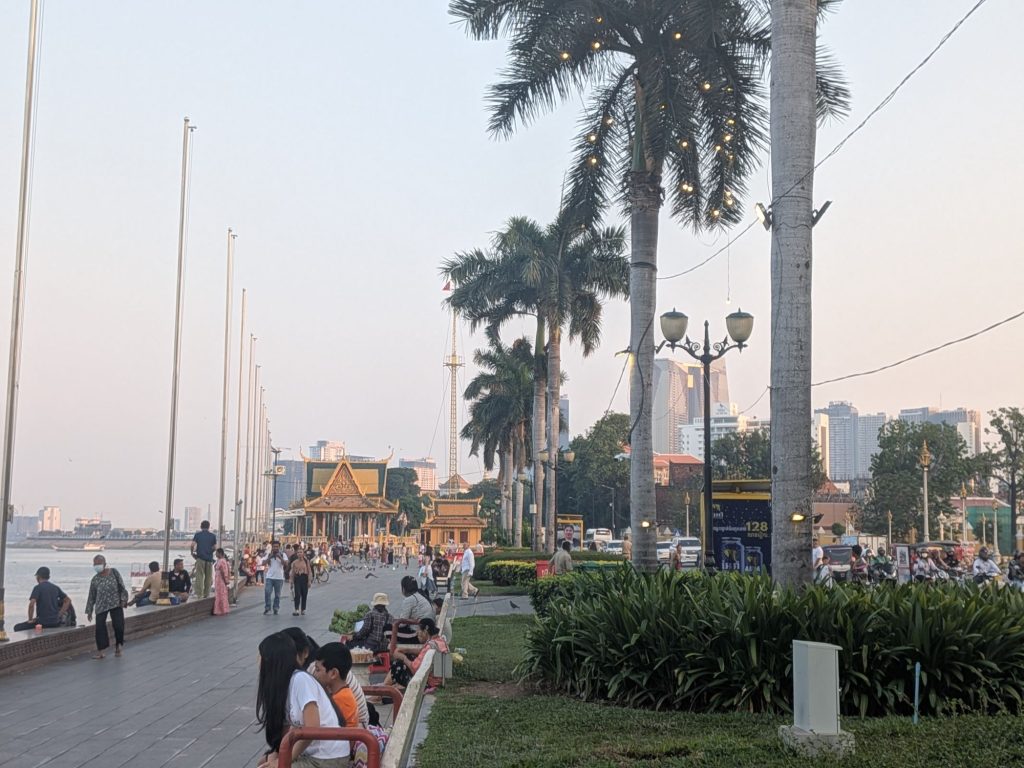
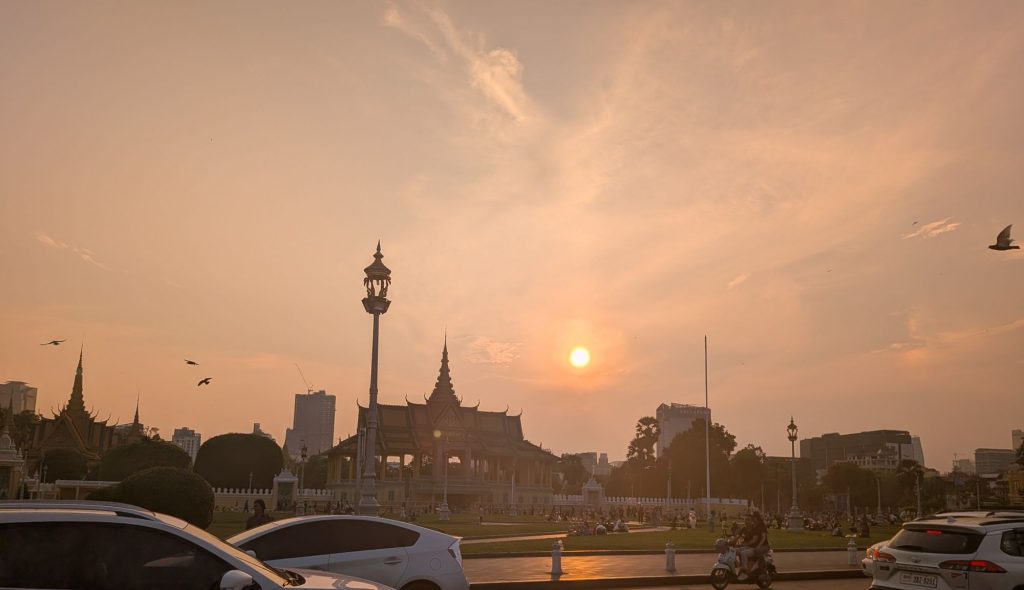
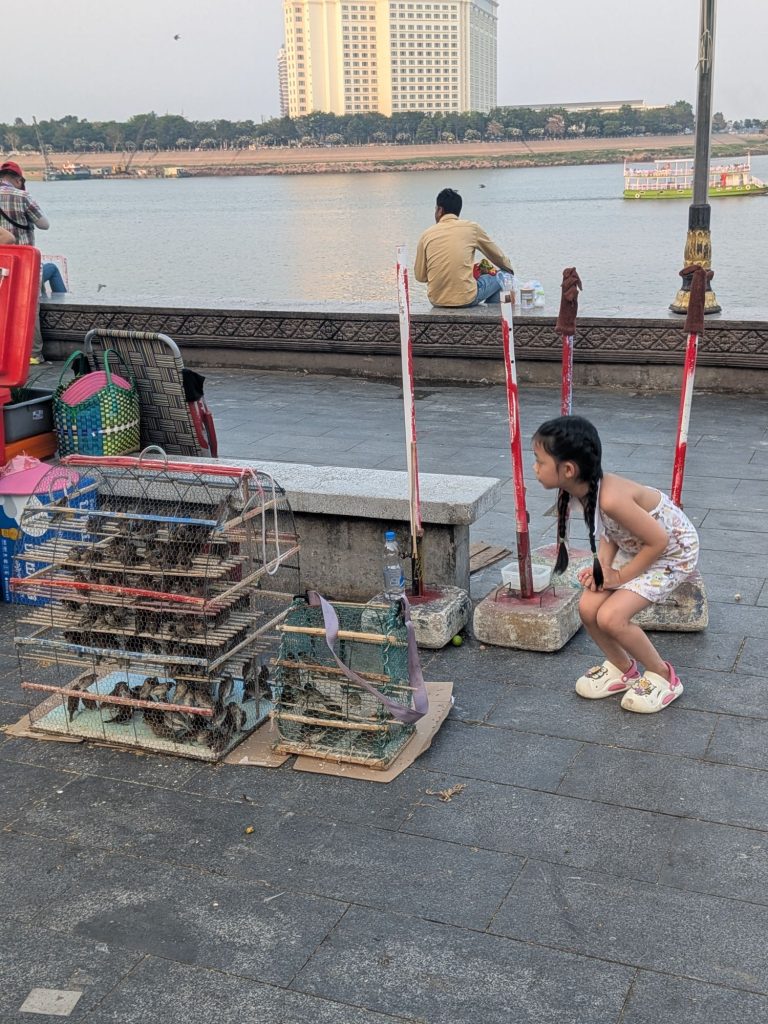
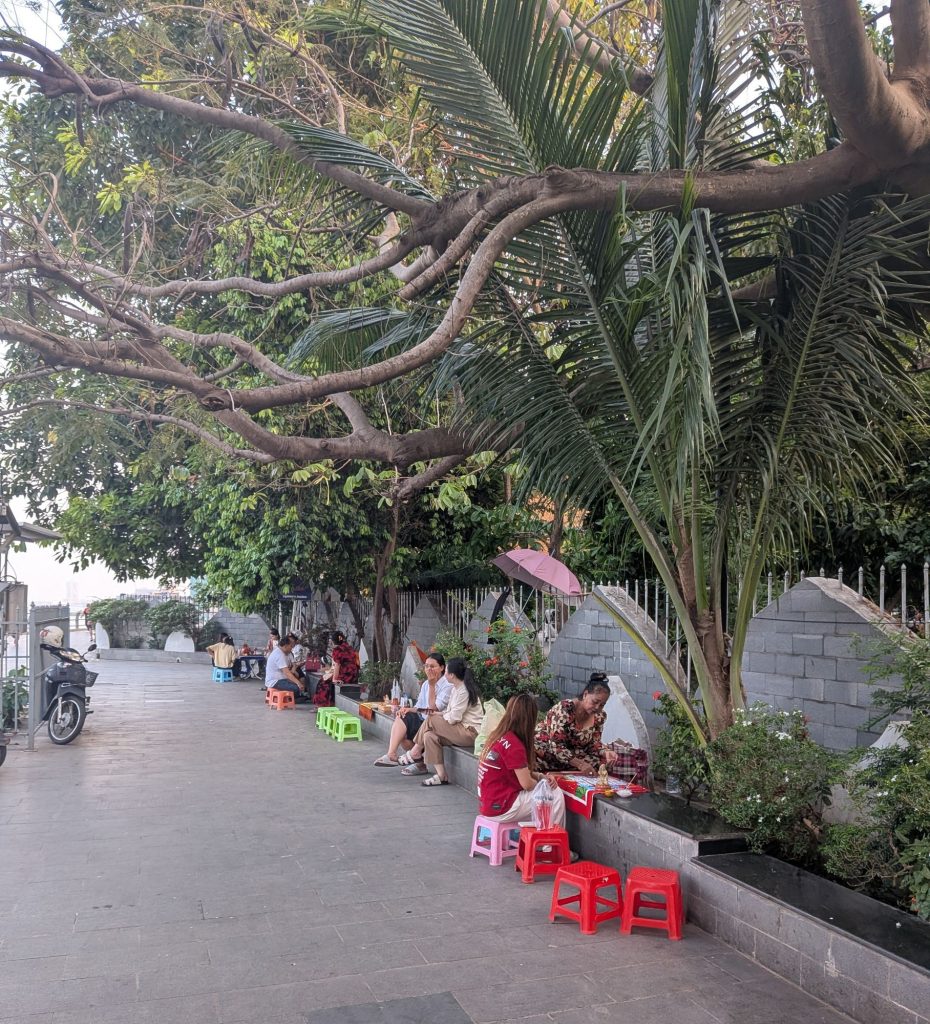
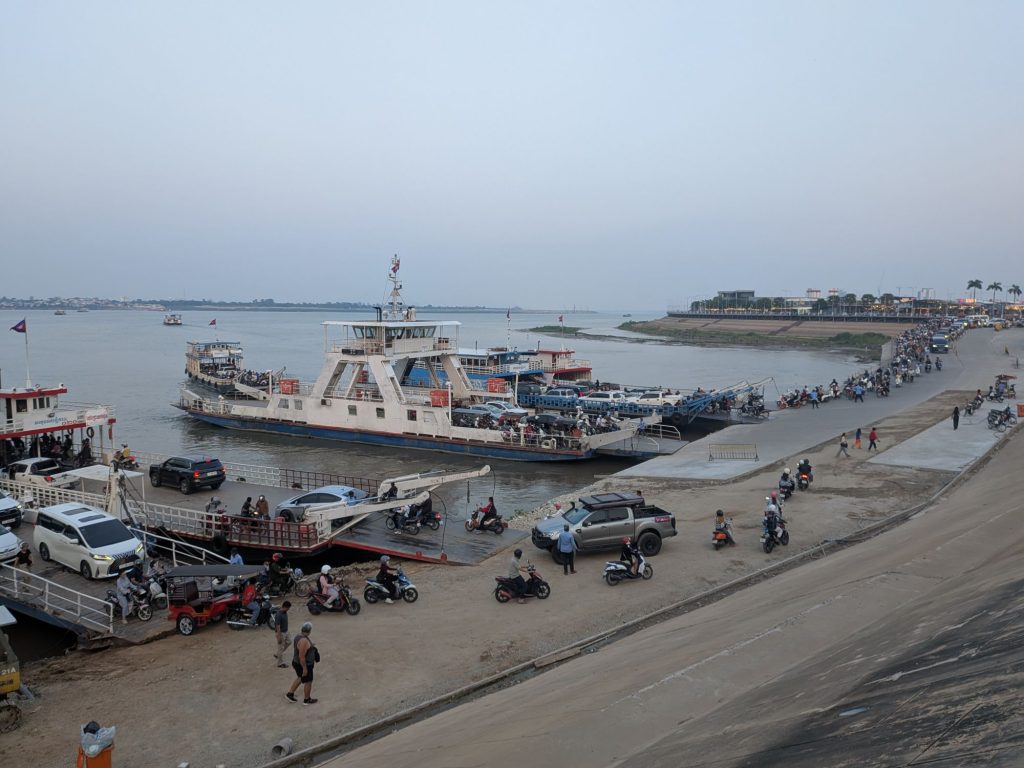
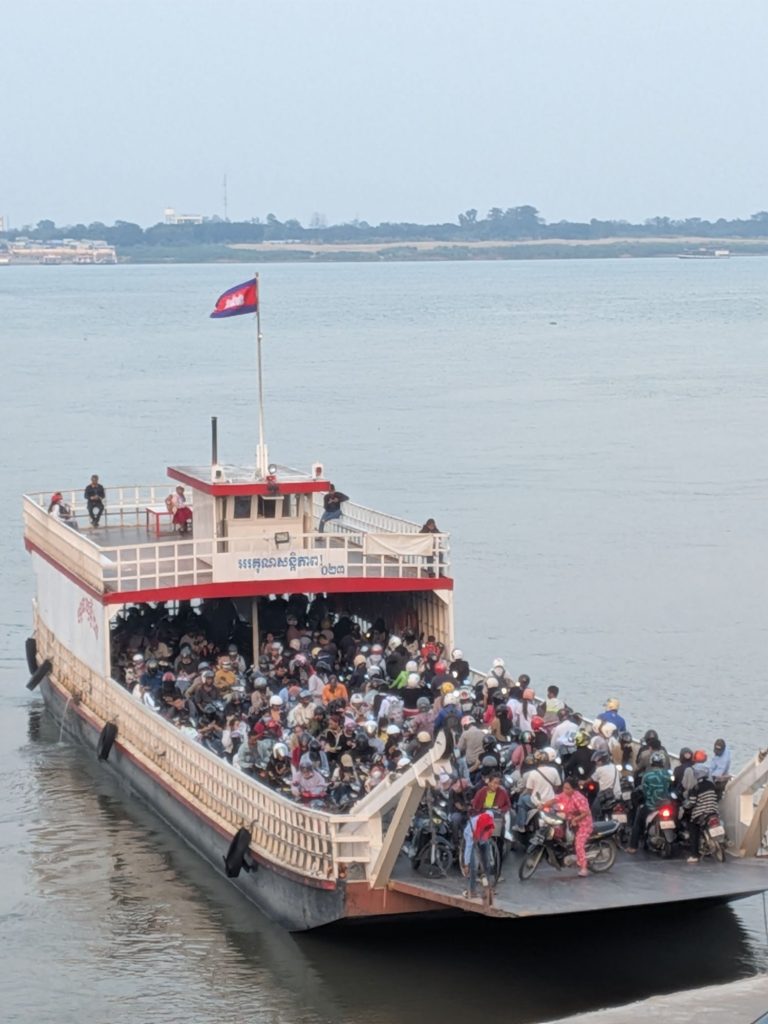

Long queue standing in the heat to get on the ferry.
Reminds me of the very start of your journey with the mean ferry ladies in Thailand.
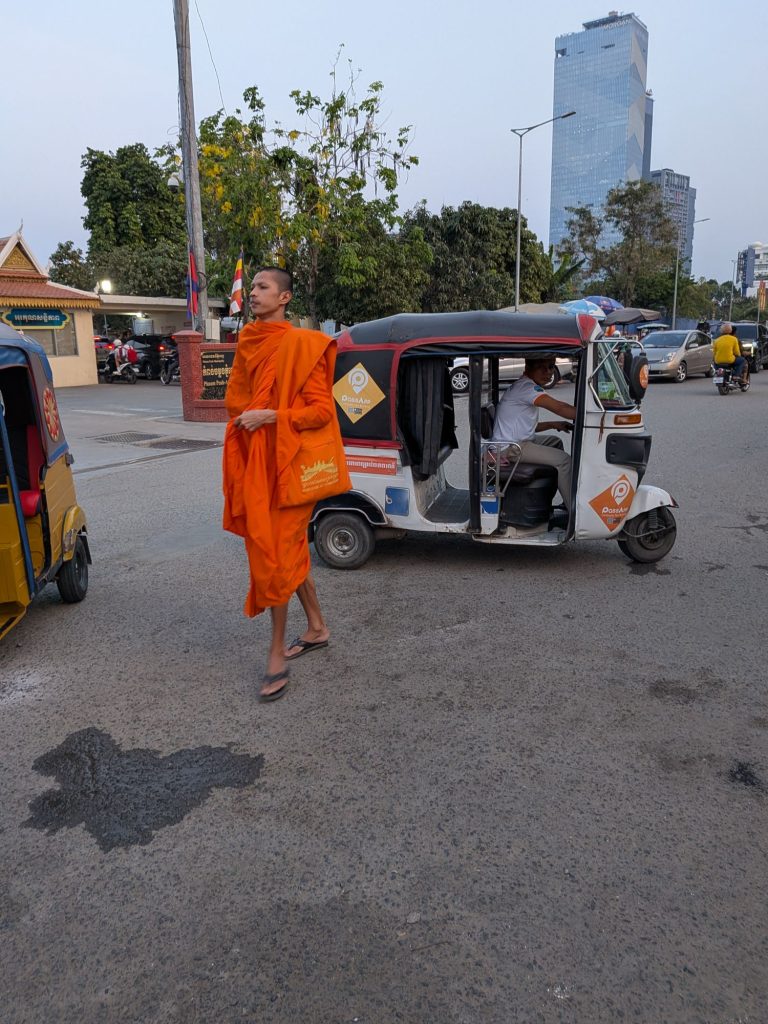
Do monks lead a celibate life.
Maybe he’s like the hot priest in flea bag.
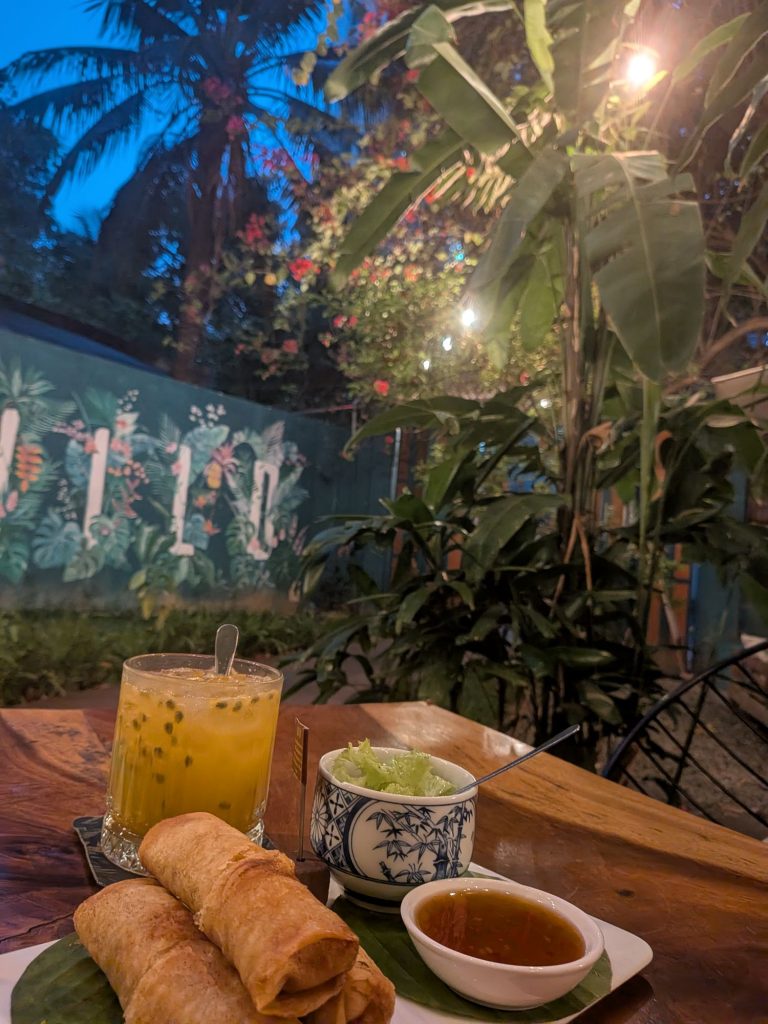
Very appropriate last photo. That meal is making me hungry and I’ve just finished dinner.
GREAT EFFORT WITH THE BLOG.
VERY ENTERTAINING AND INFORMATIVE
MUCH APPRECIATED BY AN OLD MAN SITTING ON A LOUNGE.
Dad: Monks are celibate. It is extremely rude for a woman to touch a monk in public, even if by accident.
About to hop on flight to Sydney from Singapore.
Chat soon as a local!
The economic history was really interesting. Especially the relationship between the currency and development. I have never really thought about that thugh I probably studied it.
I was shocked that under the Khmer Rouge it was illegal to practice any form of commerce. Also surprised about the current dual currency. Monday at work is going to feel very surreal for you moving from such a micro level.
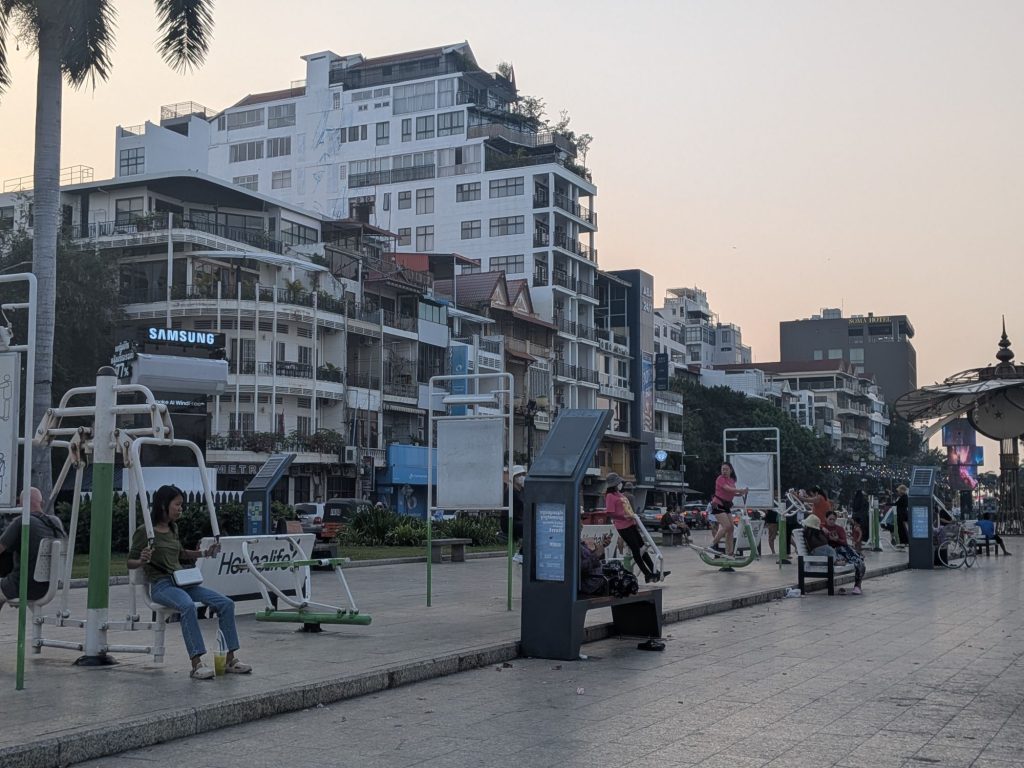
Loved seeing the random use of gym equipment on the street. Though I must admit I would not utilise fortune telling alley. I don’t believe in it but also don’t want to tempt or pre empt anything. Bit like religion in a way.
Amazed at the ferry photo full of bikes. SE Asia appears to be its own version of controlled chaos and we get upset if someone stands on the wrong side of the escalator 🙂
However chic monk is the winning photo for me. The foot placement and the way he is looking off to the distance. Another great photo Cait xx
By the way my phone autocorrected chic monk to chicken monkey!!
Those spring rolls look damned tasty and good to see you on the cocktail train. Glad you had a good day xx