
Fri 20th Feb – Trek Day 1
DW: We have internet tonight and some downtime, so are doing Day 1 of the trek as a single post. We may or may not be doing the same tomorrow.
CR: Today is day one of a tour that we booked last minute after the Laotian one fell through. There are three days in total.
The running procedures of the tour are extremely unclear. Our main piece of information is that it was one of the more expensive options from Chiang Rai. A key confusion was that we were staying in really basic accommodation (euphemistically referred to as ‘homestay’) so we’d have to bring things like soap and a towel, etc. But then no where on the website did it say whether we’d need to hike with all this gear. This caused stress when packing. I need to wash myself but I also don’t want to hike in the jungle carrying a bath towel. Anyway. Needless to say… Stressful (DW: this is why whenever Caitlin proposes camping as an activity I am dubious that she is actually capable of it. Her idea of camping obviously needs a coffee machine, three pots, two pans and five books.)
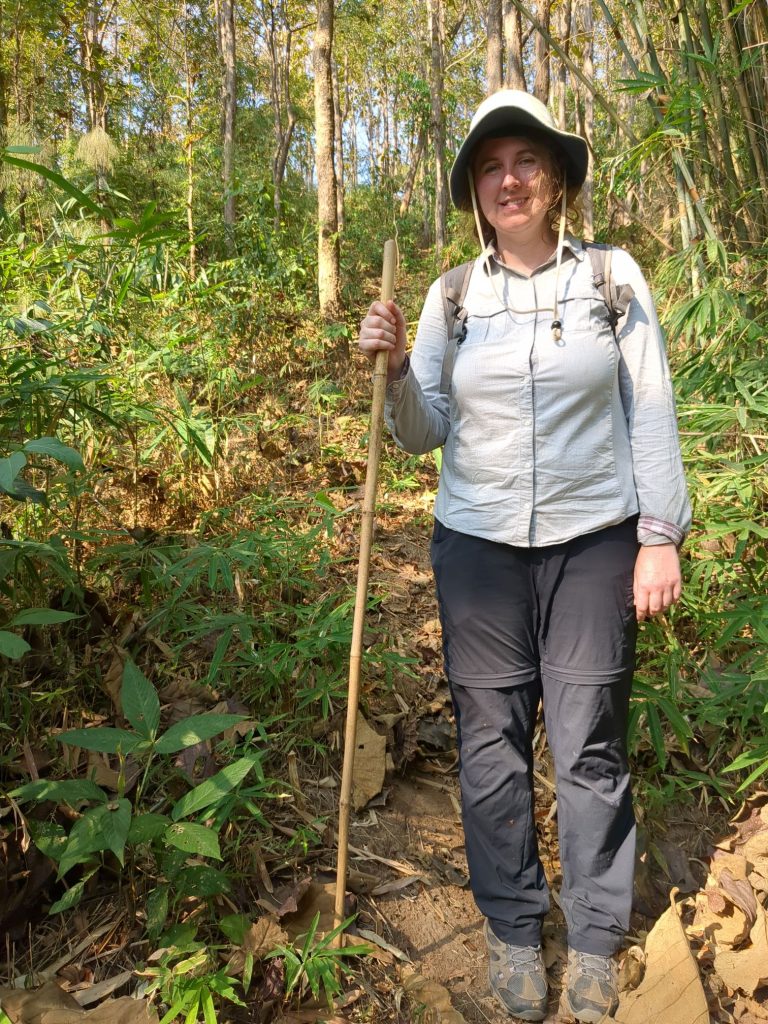
Our guide picks us up from the hotel in a tuktuk and we go to Activity One (elephants). This is obviously fun. Then Activity Two is jungle trek. Trek is really Trek not ‘trek’. A second guide joins us. That’s when you know you’re about to be worked hard: when your guide has a guide. Not to worry, this man who meets us for Trek is known for his impeccable reputation as a porter. He confidently declares of all the many tourists he has taken out trekking in the Northern Jungle he’s not lost one yet. He also carries a machete to bush bash. Machete life is big in the hills.
DW: Over dinner we discover Caitlin may be the first Australian woman to have completed Trek according to our guide. I am beeming with pride. Then we discover the motorcycle cheat code Caitlin used to avoid carrying her Ottolenghi tote full of random stuff [CR: not random – clothes] was a once-off and definitely not an option tomorrow. I worry for who has to carry the tote…
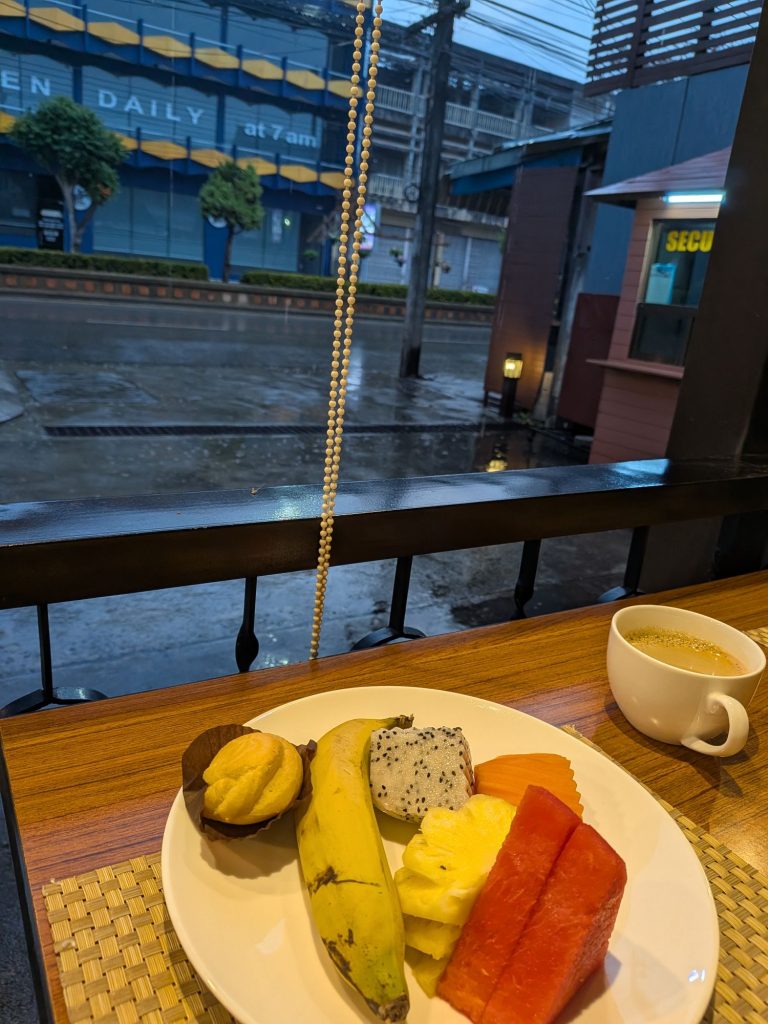
CR: I look back on this breakfast now as a pinnacle of comfort and good fortune.
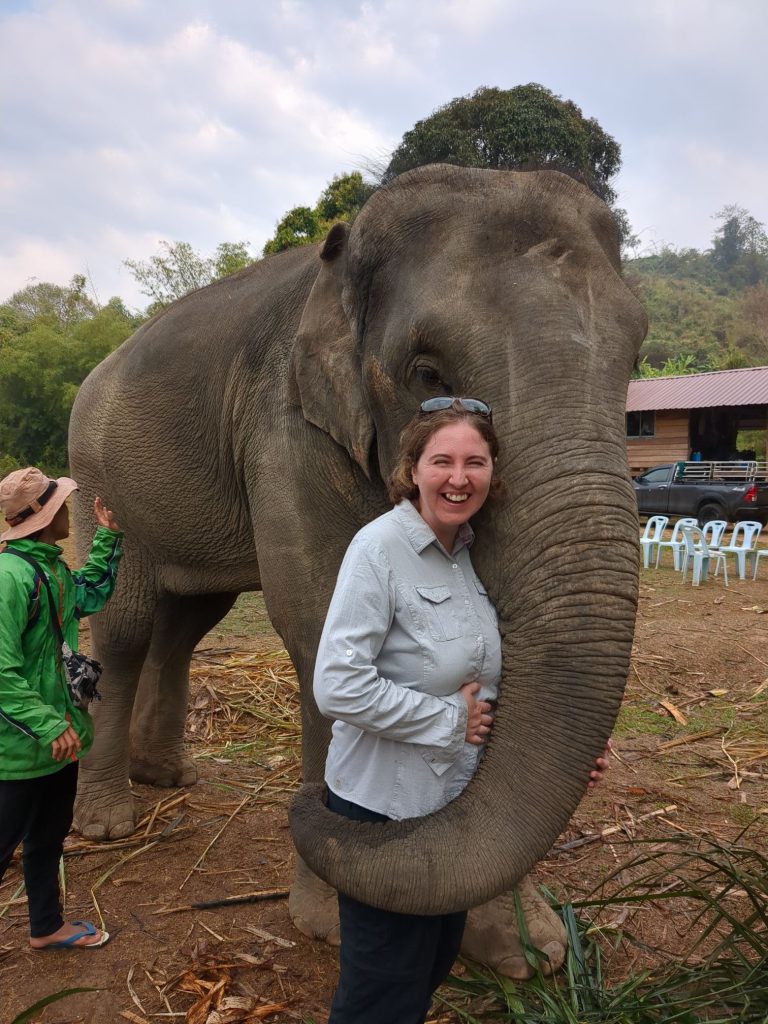
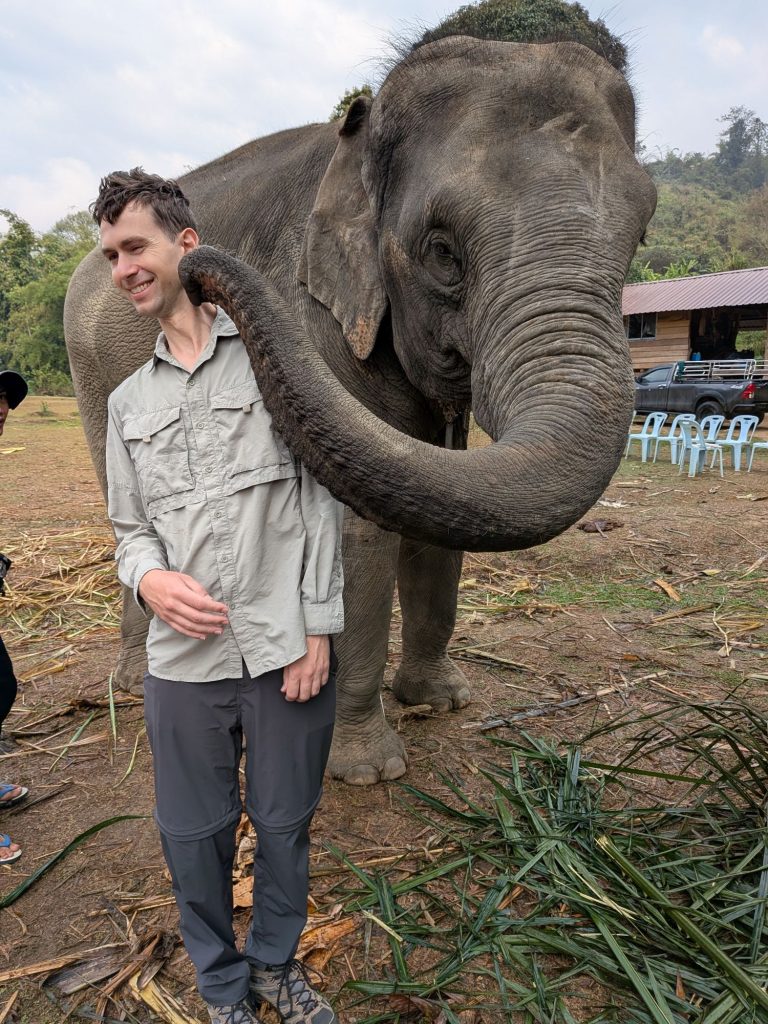
CR: And in fact we don’t ride the elephants. We drive them. And only for 10 minutes a day maybe 30 minutes sometimes an hour if necessary a few hours only.
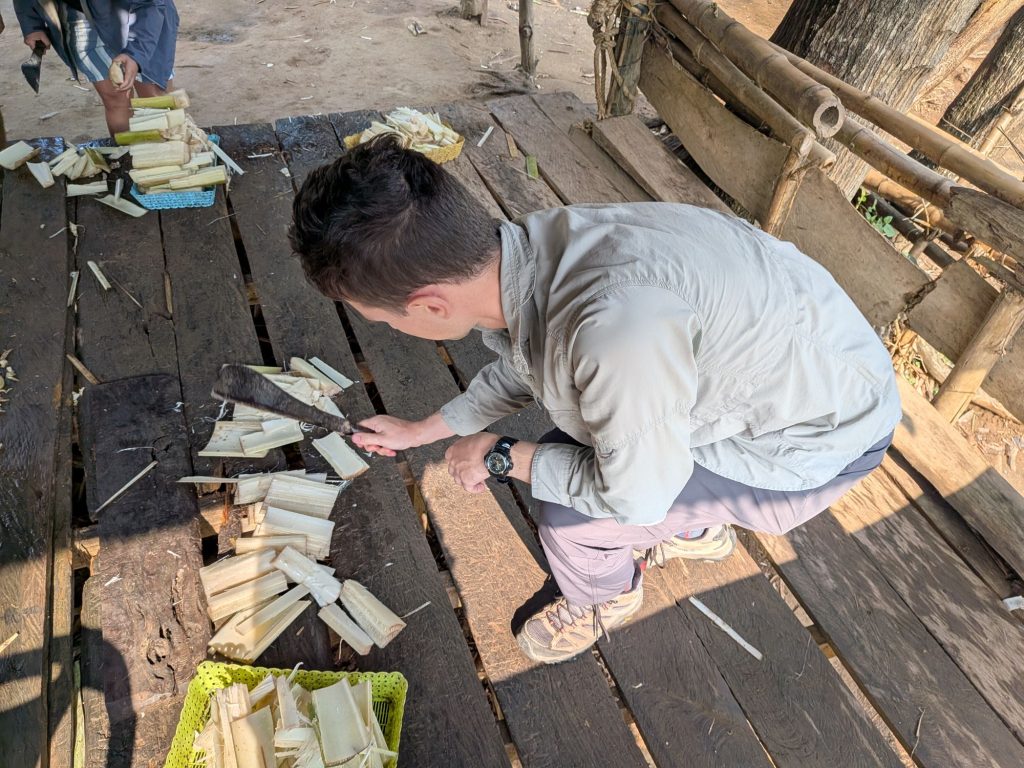
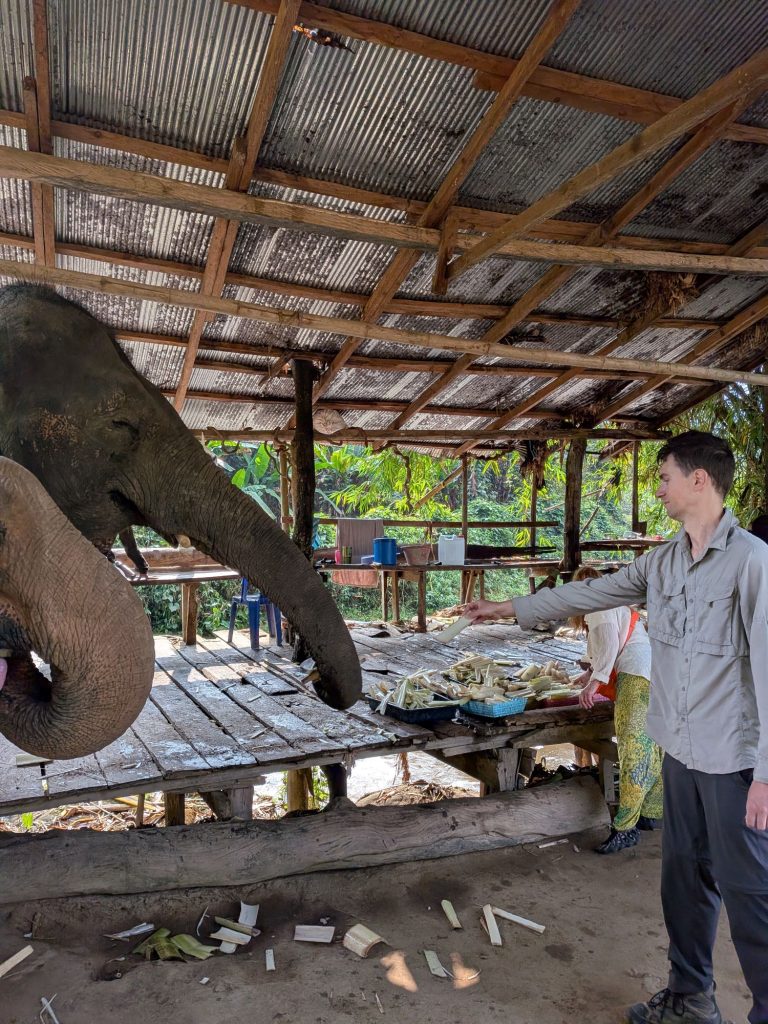
DW: The experience ended with me mounting the elephant Mahout style. Caitlin noted she lacked the physical coordination to attempt this and so I was volunteered in her place. I was uncertain if this was disrespectful or abusive to the elephants. It felt unclear. The confusing aspect is that these elephants obviously have a better and more fulfilled life than those at Taronga. Those elephants trample the same grassless patch everyday all day. These elephants go up and down hills looking for food. They couldn’t find the male elephant for a while and then when they did bring him down from the jungle he just kind of walked off to some trees on the other side of the river instead of doing activities. The basic enrichment seems to be the same (Taronga takes pride that they can get their elephants to raise their legs for an inspection, this seems the exact same motion Mahouts use to climb onto the back). I think if I was by myself I wouldn’t have done it and still gotten a similar amount out of it, but don’t regret my choice. Also, elephant hairs are really stiff all over their body which makes them an interesting texture to touch.
CR: I really wanted to but again saw only broken limbs in my future.
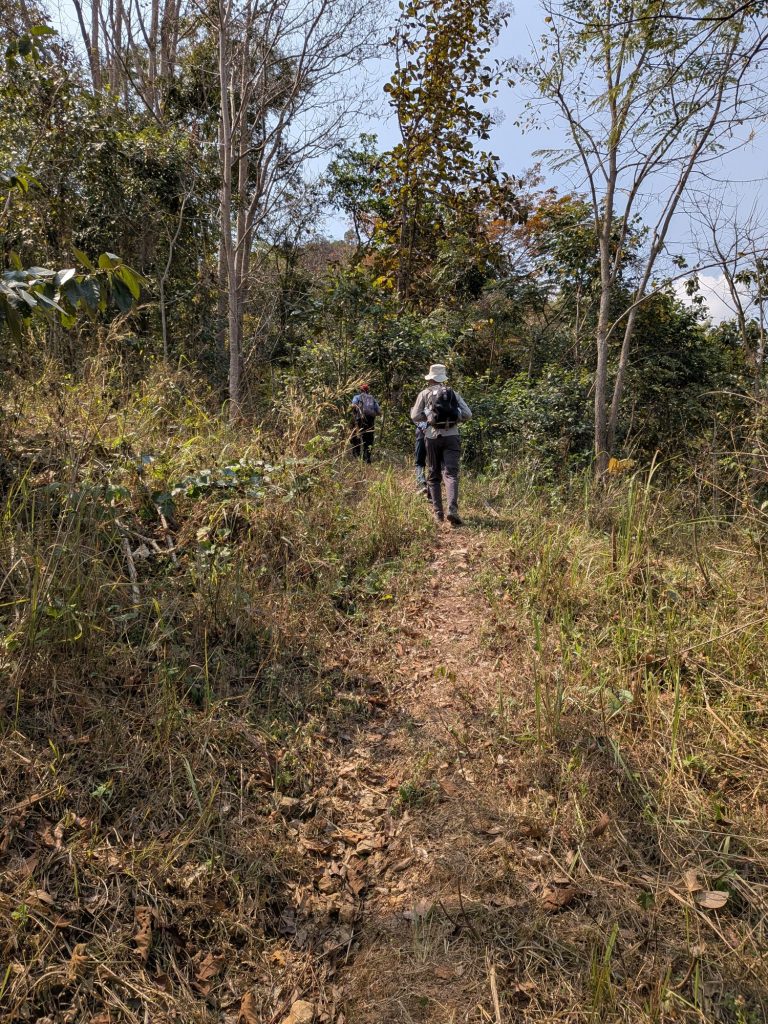
DW: We’ll see who has the last laugh tomorrow.
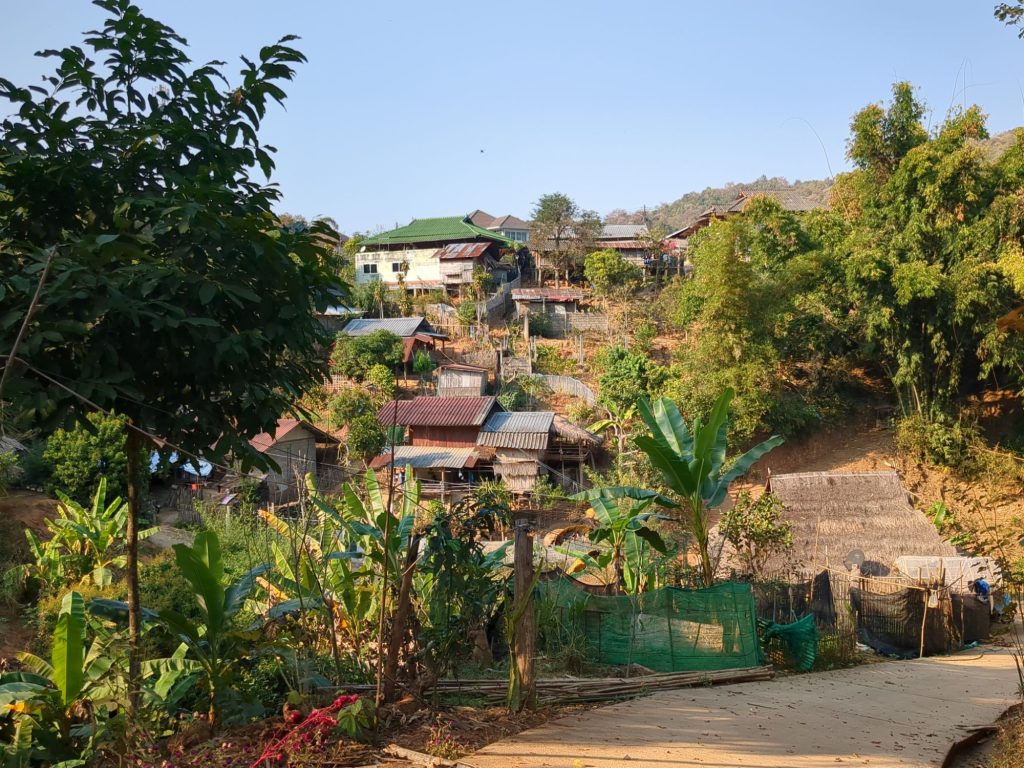
CR: From what we can ascertain they lived in the jungle until the jungle just sort of got desecrated away as the clan got bigger and that is how hill tribe village is born.
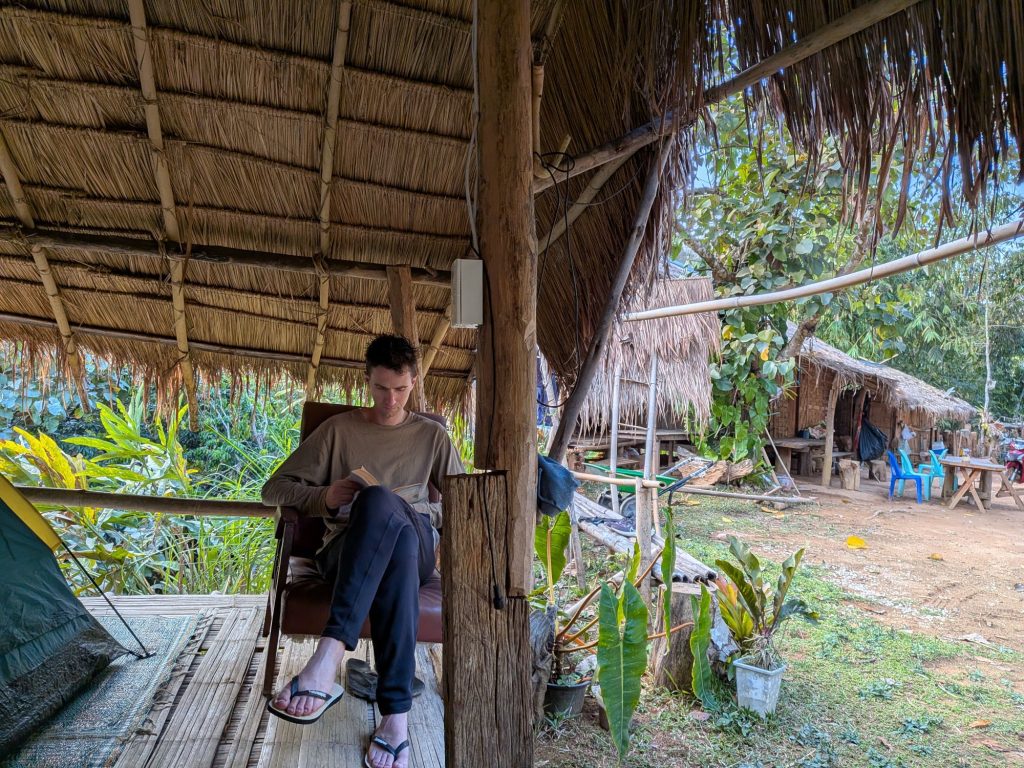
DW: We all love the roosting chook at the door. They are very welcoming and I would love an equivalent at our house. The cats can go, no-one likes cats. Homestay is a critical part of trip. Many of you may know one of my key goals in life is to keep Caitlin grounded. Homestay is an important experience to know what you can actually handle and how people actually live. Also, it is not that bad at all here.
CR: I dispute this about ‘how people live’. Homestay is to make tourists suffer for their sins of wealth. The owner actually lives 200 meters away in what I can only imagine is a jungle palace with a hot tub and soap.
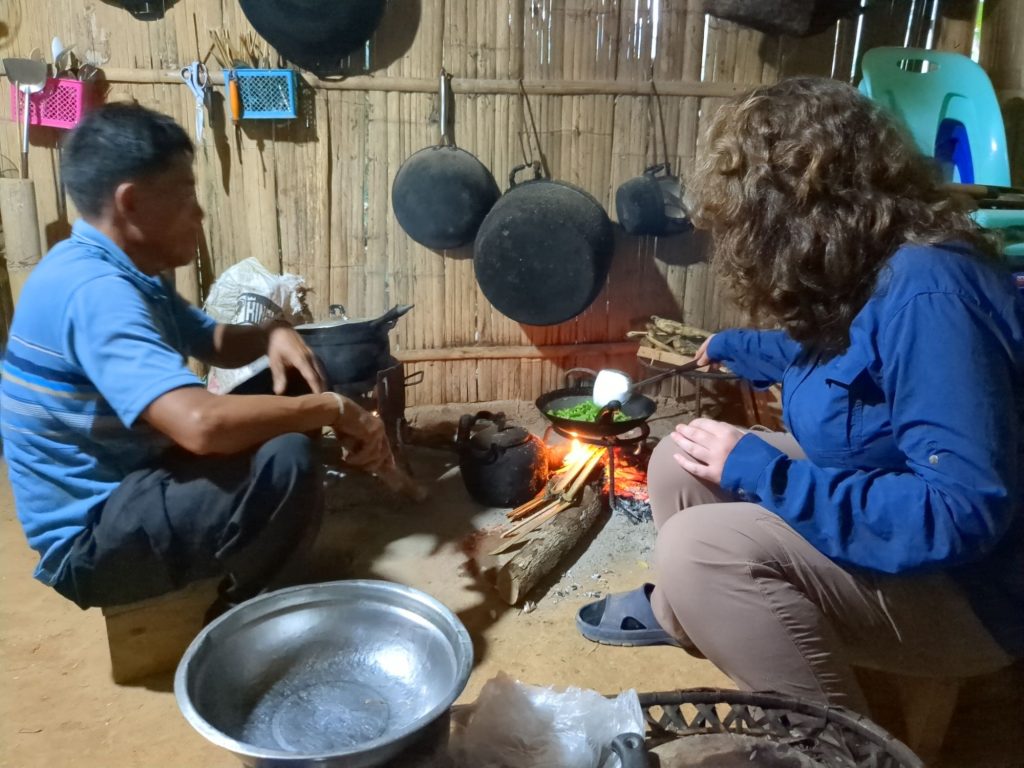
CR: While we are eating I ask, “why are there so many firecrackers?” Guide gives quizzical look. “What is that sound?” I try again. “Gunshots.”

Wow wow wow what a day! Caitlin Reulein trailblazer!! Crying that the Ottolenghi tote is on Trek and very impressed with your machete skills Declan. Enjoyed your thought around the elephant experience and homestay. Not sure I would enjoy living with all those animals. Must be so noisy.
Favourite photos: obviously both of you with the elephants. You both look really happy 😊 and I will always love photos of Caitlin with food and in different kitchens.
Really enjoying that there seems to be more photos of both of you in this blog. It is great to see you and your faces, expressions, mud and sweat. Well done xx
Love the elephant photos. One of my earliest memories is at Taronga zoo when I was about 4 or 5 riding on an elephant. They made seats where I think 2 people sat on each side of the elephants back and the keeper walked the elephant around the normal pedestrian paths. On so many levels that wouldn’t be allowed today. Attitudes were much different back in the day.
Everything we do has an impact on the environment. To me visiting an elephant sanctuary is a positive impact.
Cait, I admire your sense of adventure but this is way out of my comfort zone.
The photo of you at the end of the day looks like it could have been taken in the Australian bush. You don’t look sweaty at all. After 20 minutes of tennis my shirt is drenched. I can’t see any signs of perspiration at all.
Would love to know over 12 months how many tourists do this trek.
Mum: animals incredibly noisy.
The elephants were fun. They are very elegant animals for their size.
Helps that we had a guide, she made sure there were some photos of us both. Also because it was a private trip we could pretty much take our time so I didn’t feel rushed and could spend time taking photos.
Dad: you say that about not being allowed today… Just not in Australia. We saw it today in Thailand. The elephants looked so so sad just chained up on a tiny chain lead waiting for someone to book a ride.
If the blog had smellovision my state of distress would have been cleared.
Dad I usually think you are capable of a lot but this one I can confidently say is not for you.
I tried to ask about how many tourists do the trek but it’s hard to tell. Quite a few people go with the company in high season but they offer a lot of different types of tours, most smaller or with car transits. The guide had pretty good English but nuances were difficult to iron out. The guide did mention the Germans are the most adventurous though.
First Australian woman to survive Trek – what a legend! Caitlin, I’m dying at the ’10 Grandma Aileens’ vs. the ’80-year-old refugees’ realization; it’s wild how much history shifts depending on where you stand. Massive respect for the elephant reflections, too. Good luck surviving the ‘homestay’ and the chickens—hopefully tomorrow’s Trek is slightly less machete-heavy!
Everytime the guide clarified Caitlin’s accomplishments, the specific phrasing changed. First it was Australian, then Australian Woman, then young (unclear definition) Australian Woman. We had to get out of there before they stopped calling Caitlin “Hero”.