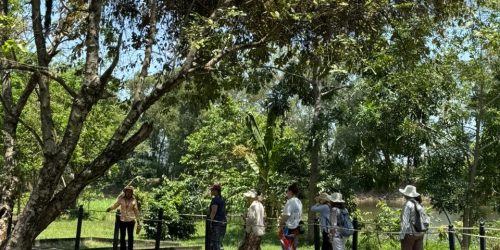
CR: A day similar to yesterday. Cruise time passes quickly. We read, watch the view, have lunch, work on the prior day’s blog, have a little excursion ashore and then arrive at Luang Prabang around 5pm.
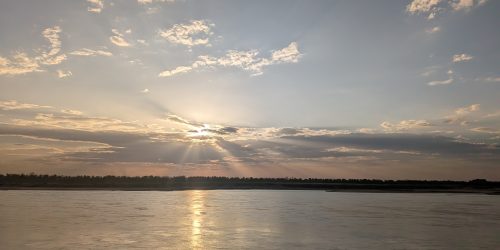
DW: We end our trip at Luang Prabang at twilight. More details to follow on Luang Prabang in tomorrow’s blog. We have a few days there now.
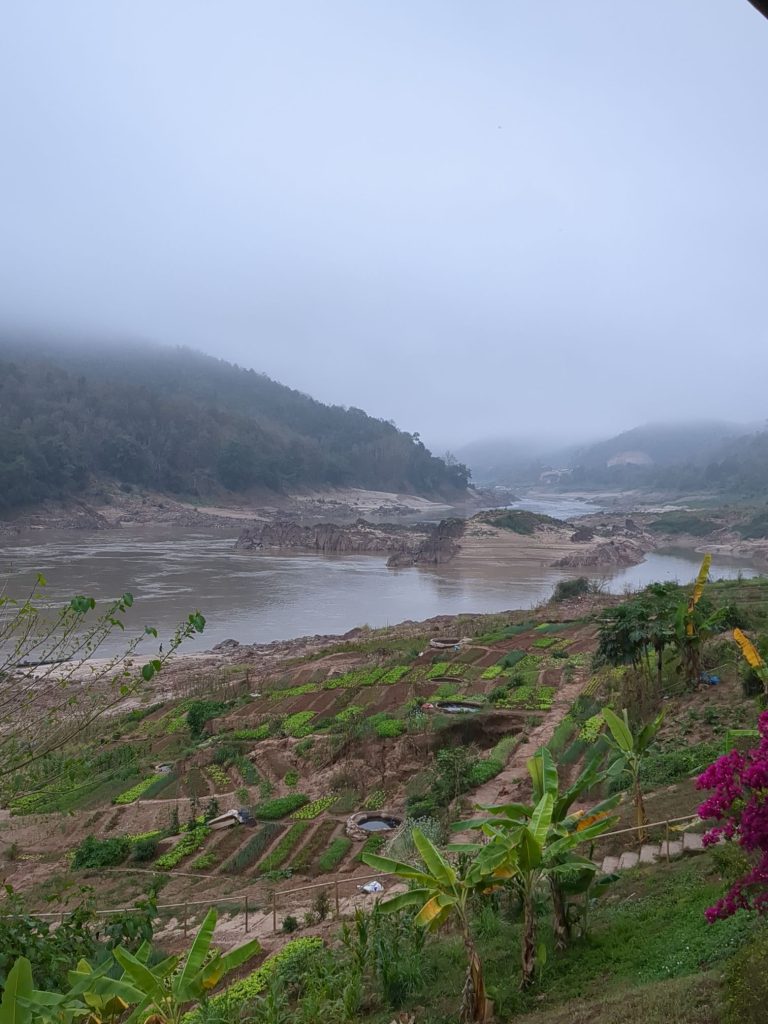
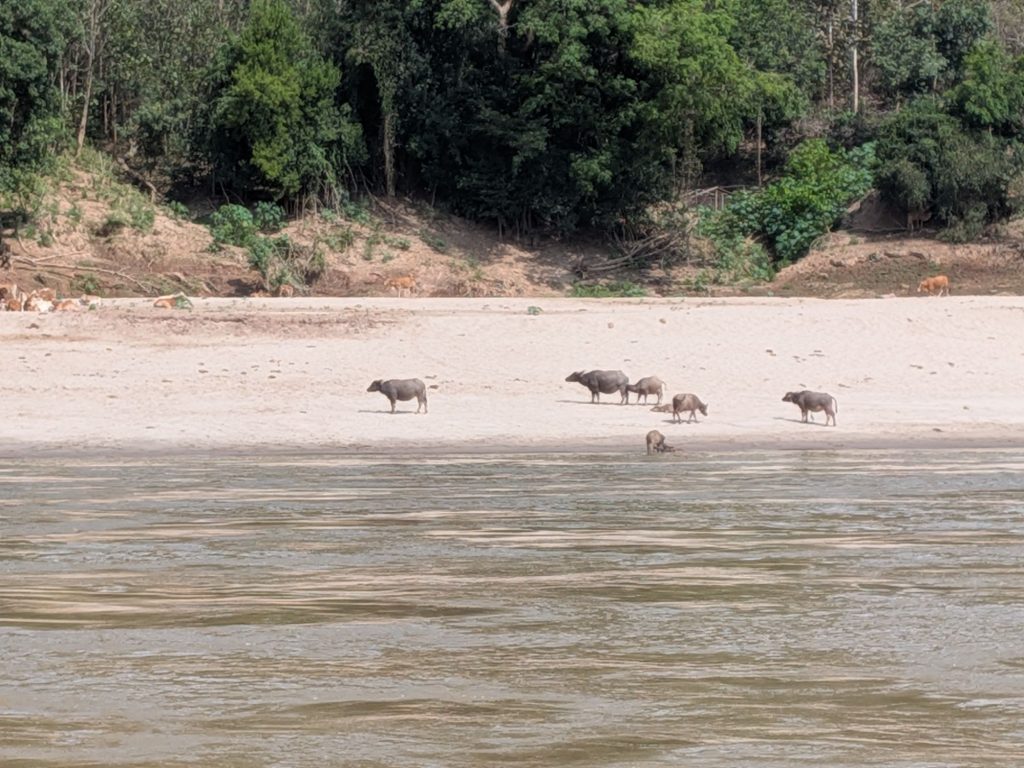
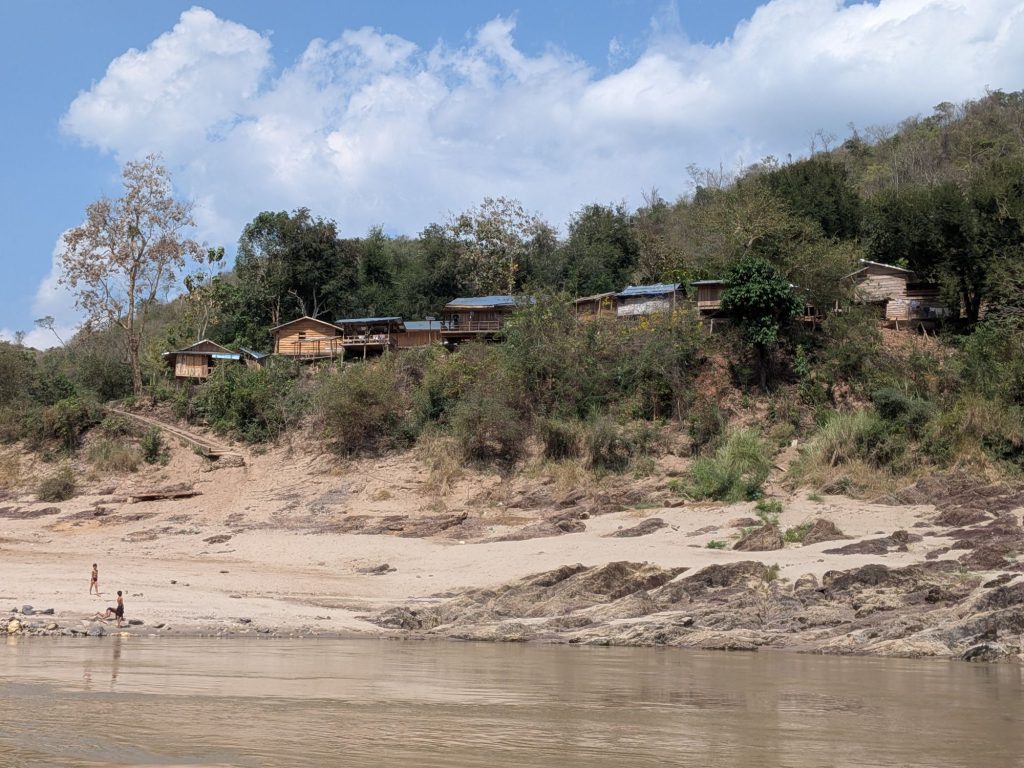
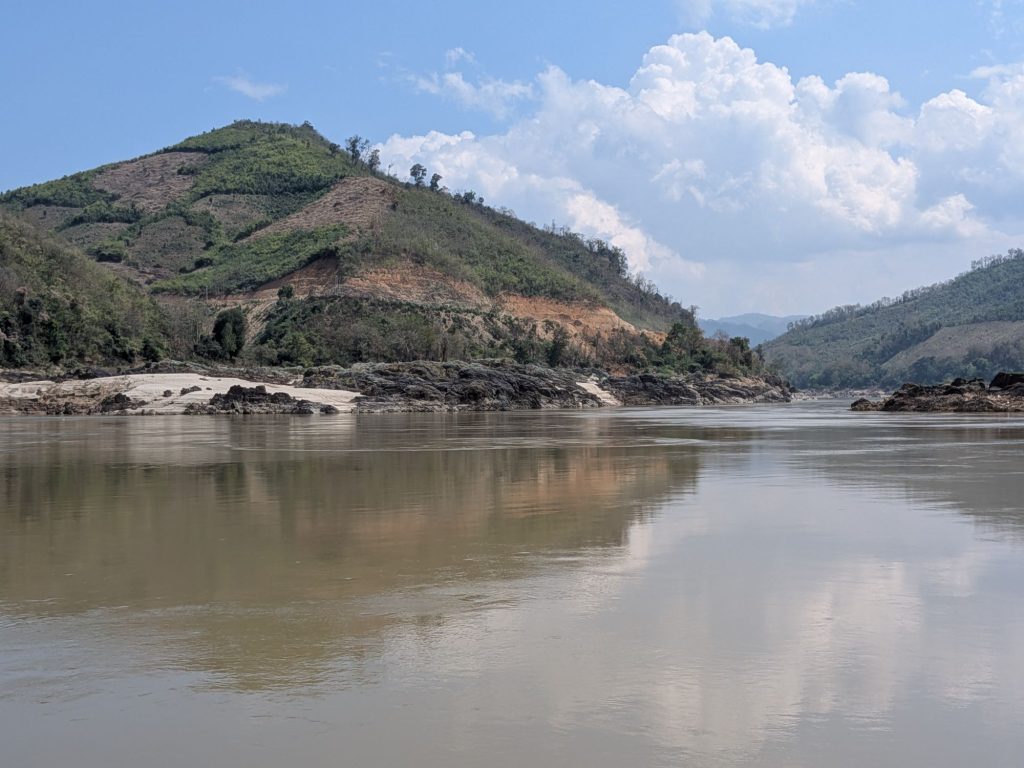
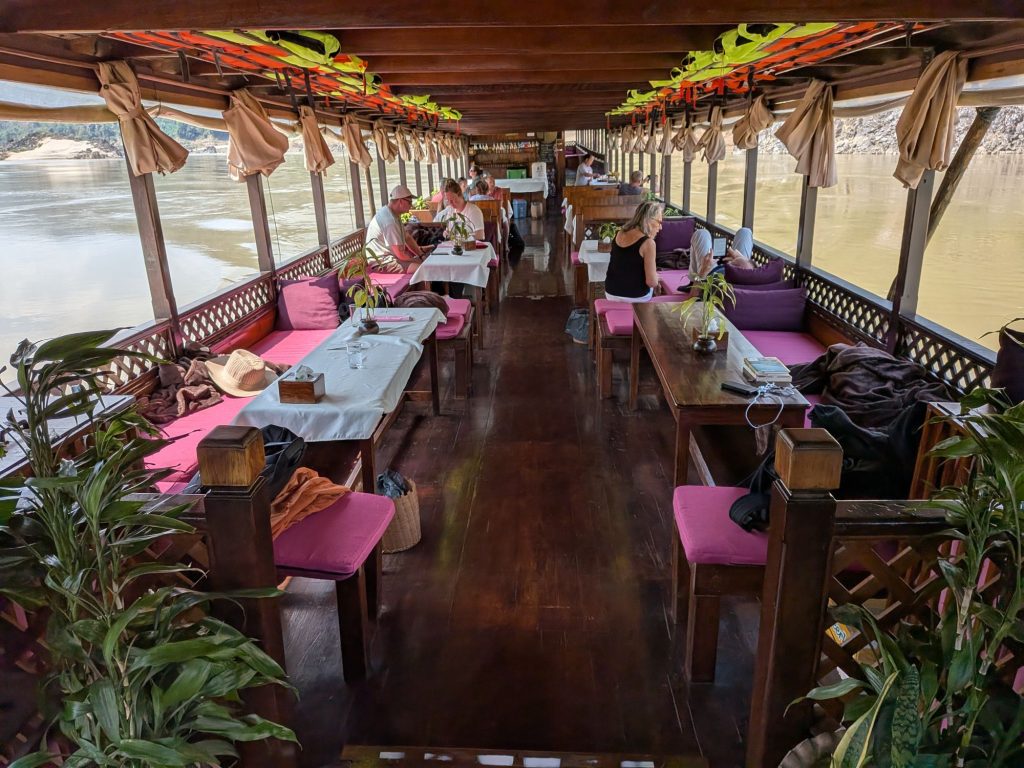
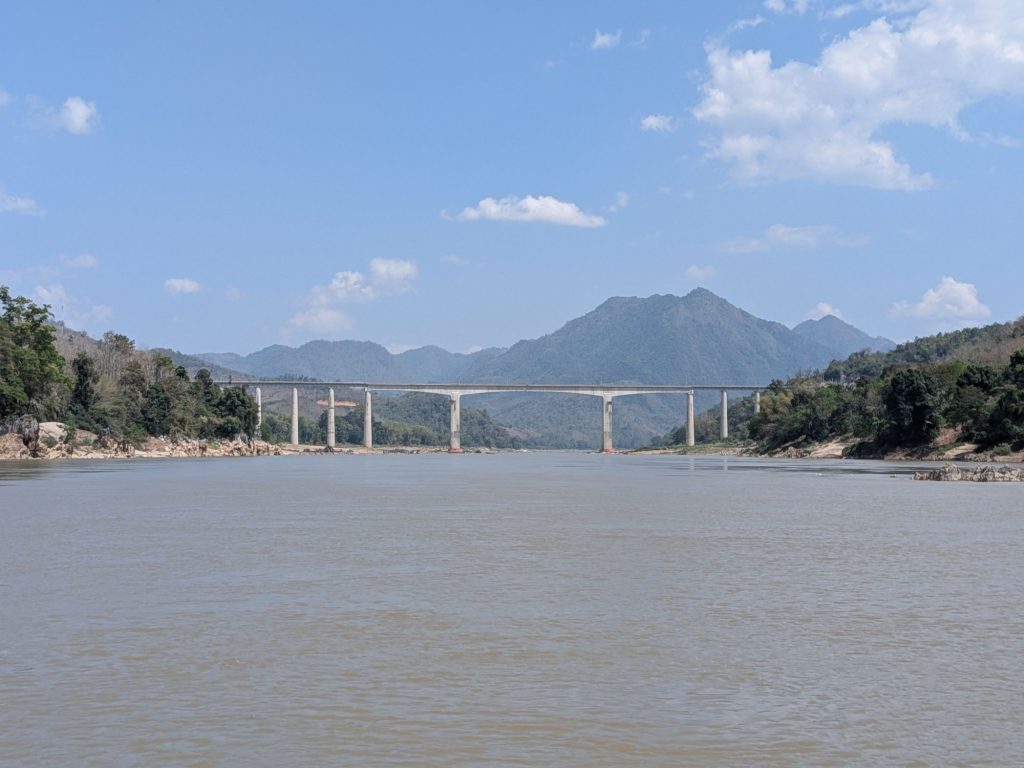
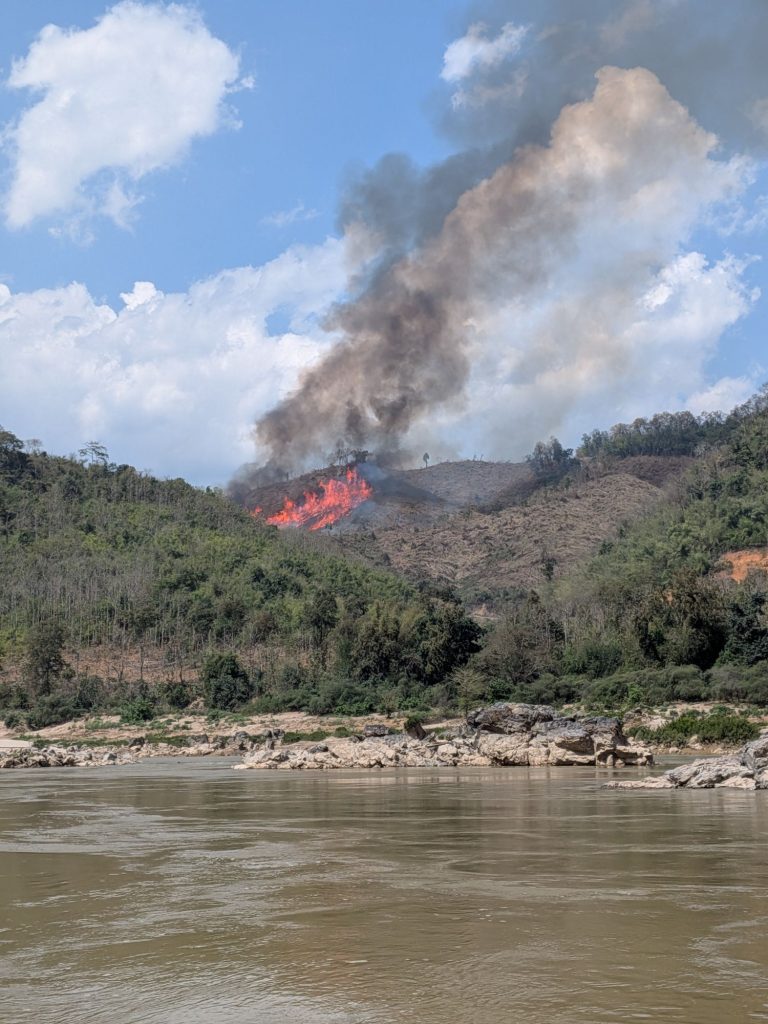
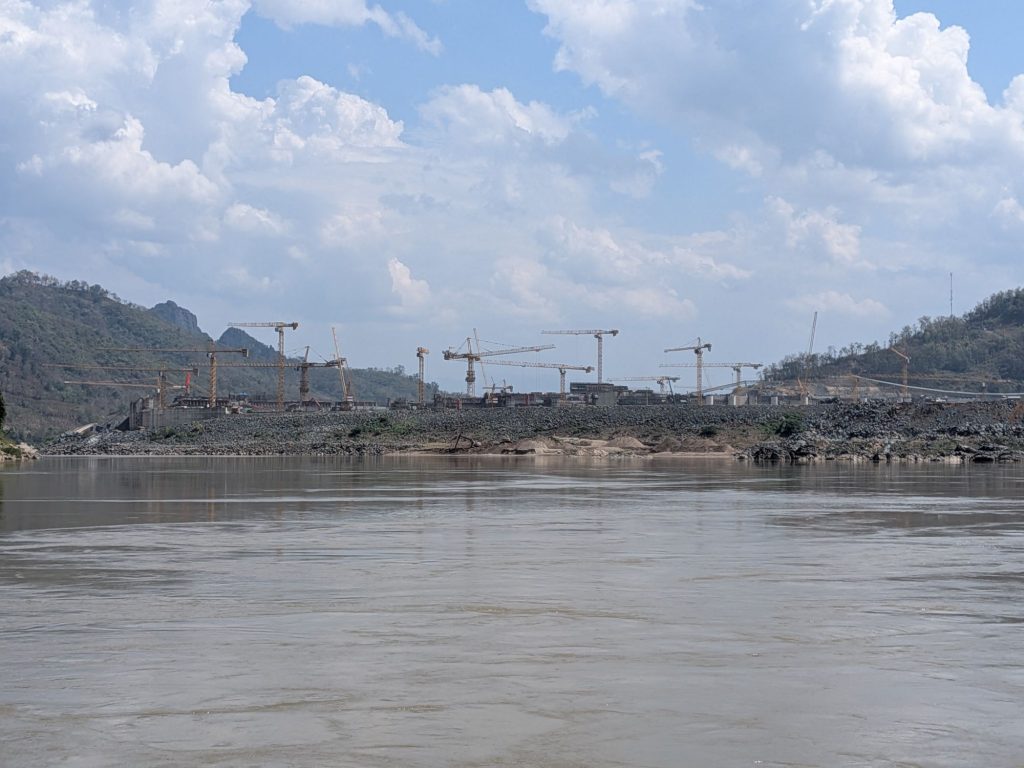
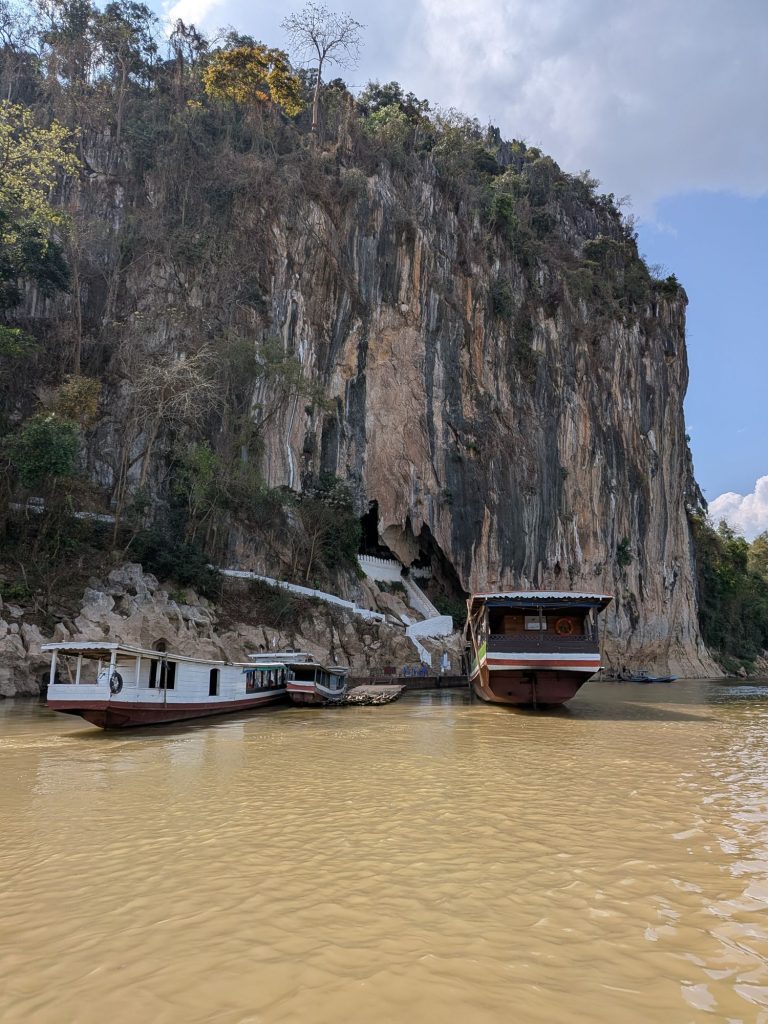
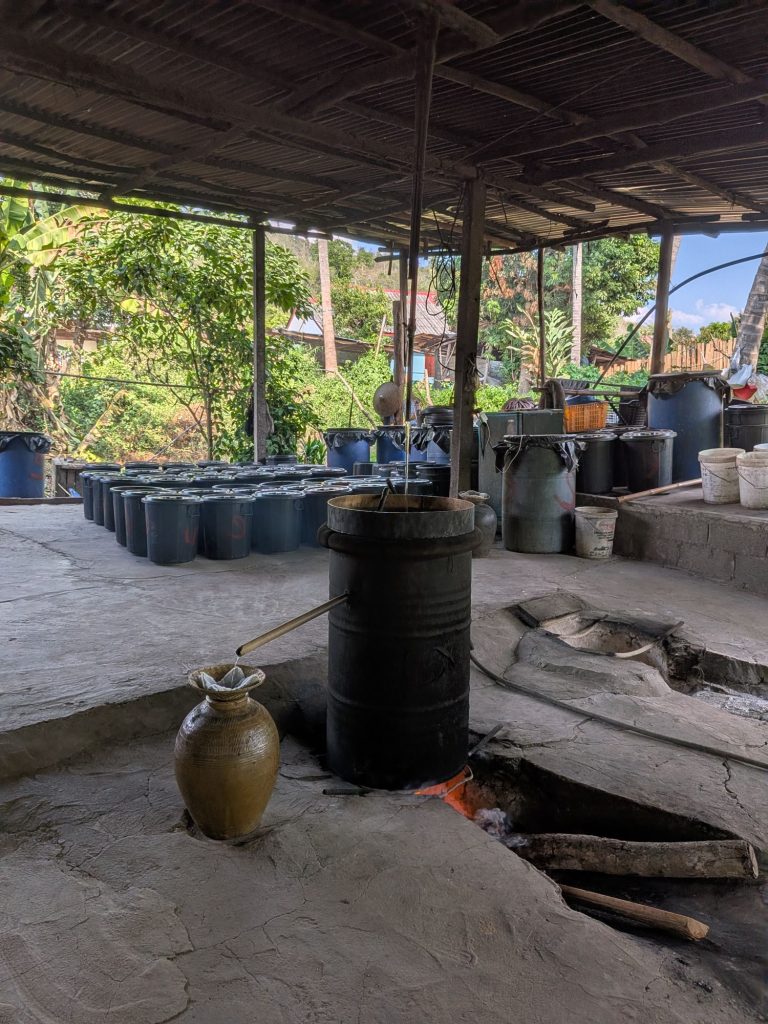
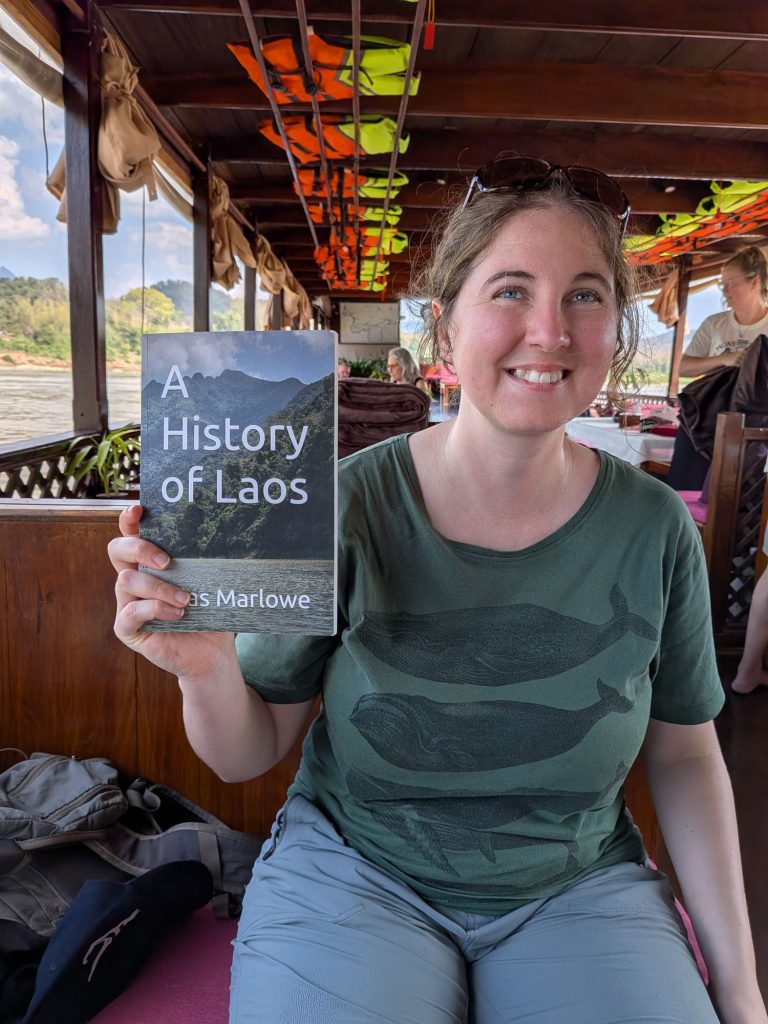
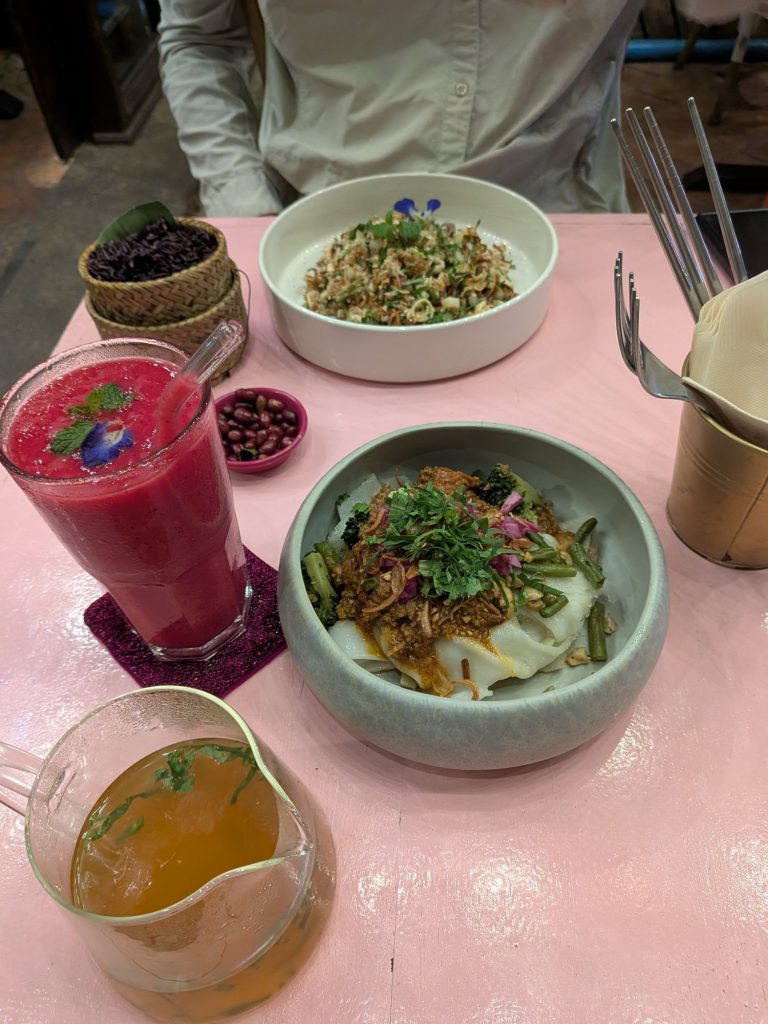
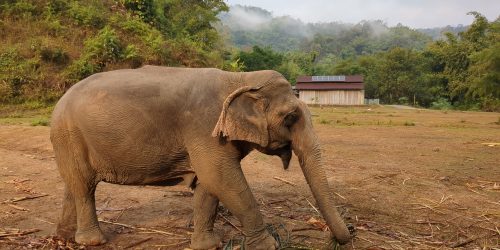
DW: In the morning from our French plantation style hotel a mist settles on the Mekong. It feels like the cut scene from Apocalypse Now where Captain Willard stumbles across a similar location. That reminds me. I better sharpen my machete. CR: All the vegetables being grown below are single season crops. When wet season comes that whole area will be inundated.CR: There are lots of free roaming cows and water buffalo on the banks of the Mekong. They obviously belong to someone but how does the farmer know where to find them? This is an astute question because it turns out it is not yet a solved problem. Farmers know which cattle are theirs by brands and cuts made in the animal… But some brands and cuts follow a similar pattern to others and it is not uncommon to have a dispute over who owns what. Our guide says this happened to his uncle and to resolve the argument they slaughtered the animal and cut it in half, one half for each person who claimed to own the cow.DW: Most villages along the banks are of this character. Maybe 20-50 houses, all of a similar build. Lots of little kids, but no teenagers as they are off to the cities for schooling. As mentioned in an earlier post, the complete absence of a road network makes a lot of these only really accessible over the river and they to just remain self sufficient to a large extent.DW: Most of the river is covered in forests on both sides. You get the feeling that this is due to inaccessiblility more than anything. Every now and then you see hills in varying stages of deforestation (as seen here) or that have been planted over with some crop (normally rubber or bananas). Normally the deforestation is only over part of the hill. DW: The interior of our boat from the front looking aft. The reclining lounges are in front, then the little tables with smaller lounges where we spend most of our time, then the bar/food area. CR: Reclining lounges are in hot demand. The oldies nab them the first day and don’t leave. We get a go the next morning but the moment we leave to get lunch the oldies pounce. Never has an old person moved with such vitality as when they must fight for a recliner.DW: The new “high speed” (up to 40kph faster than old one!) rail from Yunnan in South China to the capital of Laos, Vientiane. This is part of ongoing Chinese investment in the region under Belt and Road Initiatives. CR: There is a general belief that Laos will soon be subsumed by China, both in Laos and in Thailand. DW: As we head further south we see a bit more evidence of burning getting started. You chop down all the big trees, presumably to dry them out, then burn and let it do its thing.DW: The other large scale Chinese investment is damming of the Mekong for hydroelectric power. We passed another one yesterday at an earlier stage of development and this one today making more progress. CR: For the first 32 years the power generated will go only to China – this is the ‘payback period’.CR: I like the tour guide of our boat. Yesterday we had a shore excursion to a small village of 98 families. It felt very remote. The tour guide is from a similar village and was explaining how it’s expected that you marry at 15 because you’re done with school at 12 and don’t have much else to get on with. There’s a lot of slaughtering of animals as celebration. The village we visit is incomprehensibly basic and I feel guilty that I am relieved to leave it after an hour. Today’s excursions are less socially confronting. We visit a temple in a cave first.CR: And then next we go to a whisky distillery. Distillary is a bit of a euphemism. It’s a little more rustic than the word suggests. DW: The infographic with an inspection was sufficient to understand the process of creating happy water. I might be kicking one of these off in my backyard soon.CR: I get some learning done before we dock at Luang Prabang. Luang Prabang used to be the capital of Laos back in ye old times before it was decided Vientiane would be more strategically appropriate. A little known fact about Laos: for five months the Japanese controlled the country, after the French. This ended abruptly with the unconditional Japanese surrender finishing WW2.CR: Luang Prabang this evening is very busy and loud. We go for a little walk and have dinner in town. We check out the night markets where I am convinced Declan gets the local price for a snack because he orders in Laotian (we’ve been practicing – all the activities we do have local Laotian guides so they teach us bits and pieces). I am well impressed. Otherwise not much to report from the night markets. We are a bit night-marketed-out. Bed time follows soon after. DW: The food here is obviously targeting the tourist money. Luang Prabang is a tourist town and the food is of a higher calibre and is often trying to be cool in an inner city sort of way. It’s nice, but a culture shock from Huayxai.
Is it possible to do this river cruise in drought or is there always enough water to allow the trip.
What will happen to the river boats once the dam is completed. I assume that will stop this sort of travel.
Without the use of the river and with no road network the future seems bleak for Laos.
I had no idea of the name of either the old or new capital of Laos.
I’m sure the cow felt pretty upset that the two dudes couldn’t work out who was the rightful owner.
Wonder if China skimped on the quality of materials for the dam and engineered it to last 33 years. Doesn’t sound like a fair deal for the locals. Similar business model to tollroads back home.
Happy to see life jackets on the boat.
Never get between an older person and their comfort.
They have earnt the right to have a snooze.
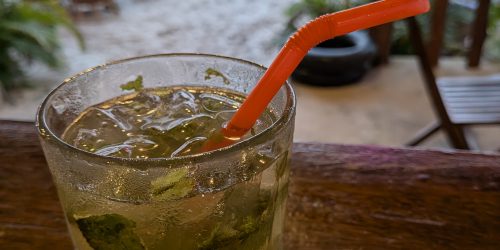
The red drink looks refreshing and tasty.
Really appreciating the insight into Chinese investment and development in Laos. I don’t really know anything about it and as you say its one of the last frontiers. Also really interesting to hear from your guide.
Favourite photo the boats parked at the temple. Outstanding shot – you should get this framed!
The interior of the boat looks very nice – great perspective on that shot. You are both so good at relating the feelings of your day and location. Thank you!!
Forgot to say how good does that Berry coloured drink look. What was it?
Mum: In the temple was a little lucky numbers donation game. We were going to participate but then the guide advised us not too. He said we looked happy now and that we might get a bad fortune and it would spoil our good cheer.
Declan has been taking a lot of the good photos. He is very artistic.
Mum: Seasonal fruits shake. There’s a heavy shake culture in Luang Prabang, it’s great! I liked it but there was Banana in it so Declan didn’t like it much.
Dad: the river cruise website did mention that there can be disruptions depending on water levels. It’s currently dry season and we didn’t have an issue so presumably there are only problems in abnormal drought.
Once the dam is completed the river boats will have to go into a loch.
Easy to have lots of fruit drinks when it is so hot!
Caitlin – I like your comment about the payback period. And @Paul (R) very astute comment about the useful life of this machinery being 33 years. This would very much be the case. 33 years is such an arbitrary number that the engineers (and accountants) would have cooked it up such that China gets all the benefit from the river and the poor Laotians are left with a bunch of scrap metal.
Also v much agree about the drink @Maria. Looks VERY refreshing. Just what you need after a day in the south-east Asian heat!!


Is it possible to do this river cruise in drought or is there always enough water to allow the trip.
What will happen to the river boats once the dam is completed. I assume that will stop this sort of travel.
Without the use of the river and with no road network the future seems bleak for Laos.
I had no idea of the name of either the old or new capital of Laos.
I’m sure the cow felt pretty upset that the two dudes couldn’t work out who was the rightful owner.
Wonder if China skimped on the quality of materials for the dam and engineered it to last 33 years. Doesn’t sound like a fair deal for the locals. Similar business model to tollroads back home.
Happy to see life jackets on the boat.
Never get between an older person and their comfort.
They have earnt the right to have a snooze.
The red drink looks refreshing and tasty.
Really appreciating the insight into Chinese investment and development in Laos. I don’t really know anything about it and as you say its one of the last frontiers. Also really interesting to hear from your guide.
Favourite photo the boats parked at the temple. Outstanding shot – you should get this framed!
The interior of the boat looks very nice – great perspective on that shot. You are both so good at relating the feelings of your day and location. Thank you!!
Forgot to say how good does that Berry coloured drink look. What was it?
Mum: In the temple was a little lucky numbers donation game. We were going to participate but then the guide advised us not too. He said we looked happy now and that we might get a bad fortune and it would spoil our good cheer.
Declan has been taking a lot of the good photos. He is very artistic.
Mum: Seasonal fruits shake. There’s a heavy shake culture in Luang Prabang, it’s great! I liked it but there was Banana in it so Declan didn’t like it much.
Dad: the river cruise website did mention that there can be disruptions depending on water levels. It’s currently dry season and we didn’t have an issue so presumably there are only problems in abnormal drought.
Once the dam is completed the river boats will have to go into a loch.
Easy to have lots of fruit drinks when it is so hot!
Caitlin – I like your comment about the payback period. And @Paul (R) very astute comment about the useful life of this machinery being 33 years. This would very much be the case. 33 years is such an arbitrary number that the engineers (and accountants) would have cooked it up such that China gets all the benefit from the river and the poor Laotians are left with a bunch of scrap metal.
Also v much agree about the drink @Maria. Looks VERY refreshing. Just what you need after a day in the south-east Asian heat!!